Shanghai, China
+86-17317656853
inquiry@cgprotection.com

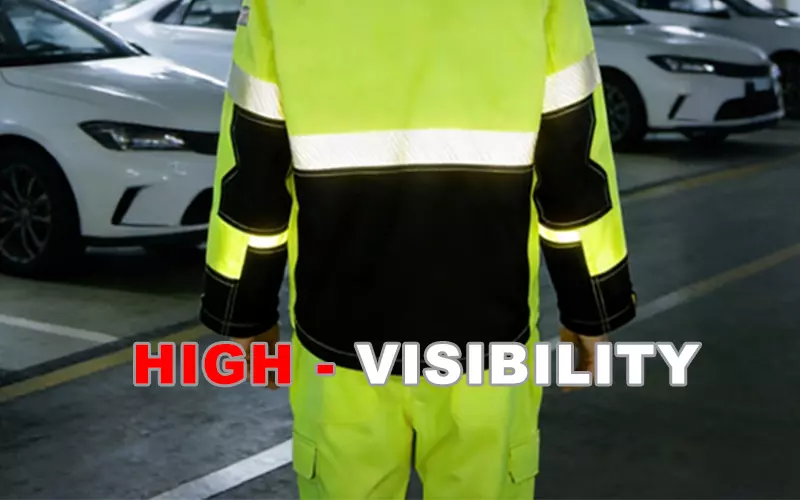
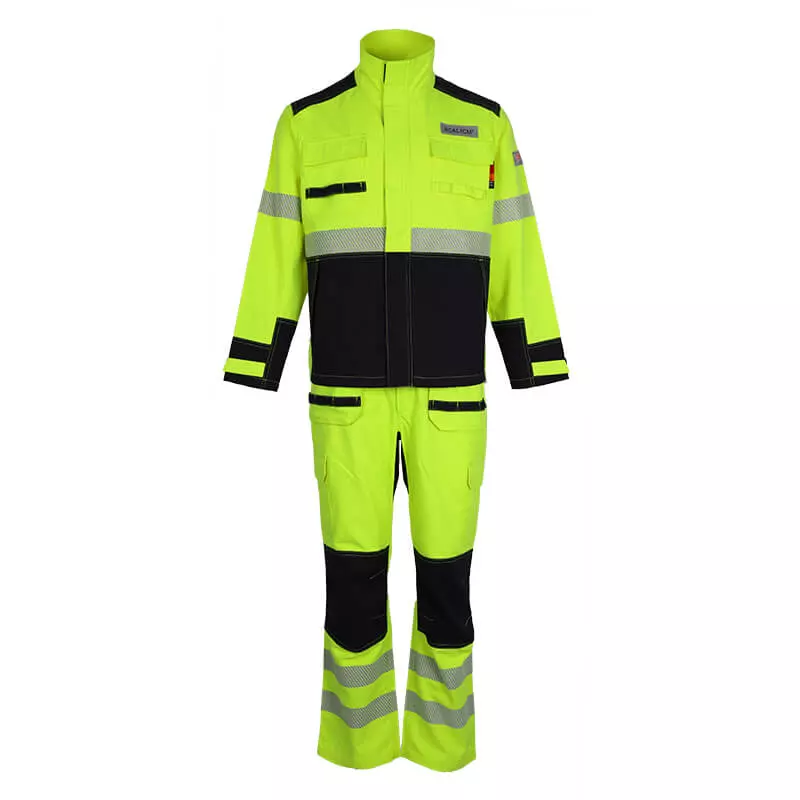
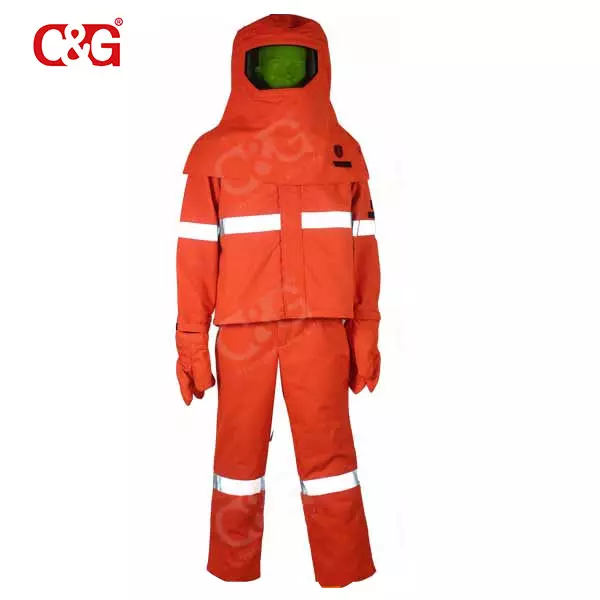
In hazardous electrical environments, protection against thermal energy is only one aspect of safety. Workers are often exposed to low-light conditions, complex backgrounds, and dynamic job sites where visibility becomes a critical risk factor. Arc flash clothing must therefore integrate high-visibility (hi-vis) design and reflective elements without compromising arc-rated performance.
Electrical workers frequently operate in environments such as substations, utility corridors, and industrial facilities where lighting conditions may be inconsistent or insufficient. Poor visibility can lead to:
By enhancing wearer visibility, arc flash garments contribute not only to personal protection but also to team-level operational safety.
a. Fluorescent Background Materials
High-visibility arc-rated garments often use fluorescent colors such as yellow, orange, or red. These colors improve daytime visibility by converting ultraviolet light into visible wavelengths, making the wearer stand out against most backgrounds.
b. Retroreflective Tape
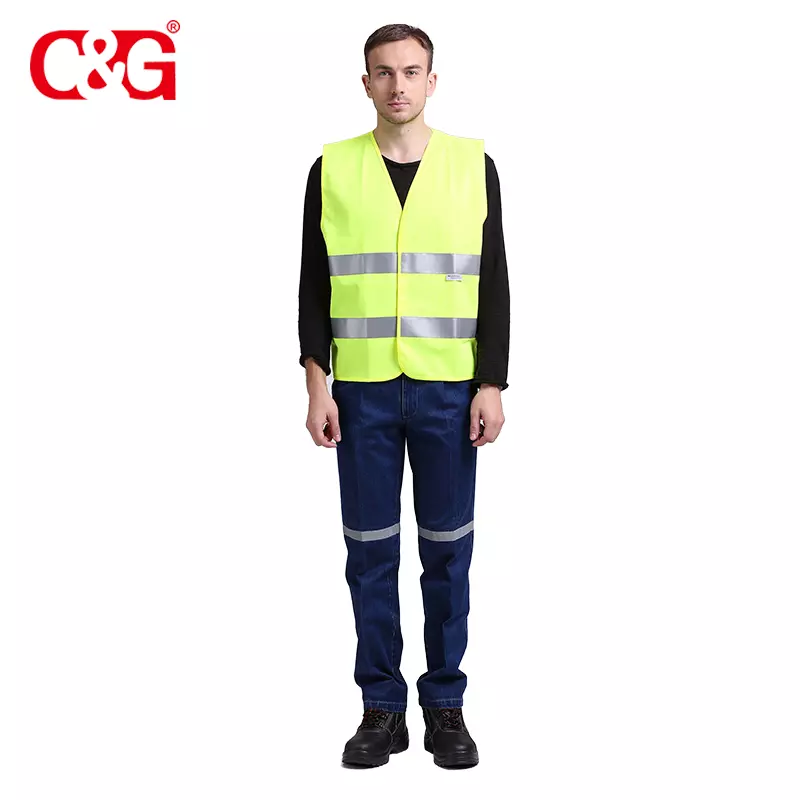
Retroreflective materials are essential for low-light and nighttime conditions. They reflect light back toward its source—such as vehicle headlights—making the wearer highly visible from a distance.
Key design considerations include:
c. Contrast Materials
Incorporating contrasting colors (e.g., dark panels) helps define the human silhouette, improving recognition in visually cluttered environments.
The integration of visibility features in arc flash clothing must align with both arc protection standards and high-visibility standards. Common frameworks include:
A critical design constraint is that reflective components must themselves be flame-resistant (FR) and arc-rated, ensuring they do not become secondary hazards during an incident.
a. Material Compatibility
Standard reflective tapes used in general workwear may not meet arc flash requirements. Specialized FR retroreflective materials are required to maintain both visibility and thermal protection.
b. Weight and Flexibility
Adding reflective elements can increase garment weight and stiffness. Designers must carefully balance placement and quantity to preserve mobility and comfort.
c. Durability vs. Performance
Reflective properties can degrade over time due to washing, abrasion, and environmental exposure. High-quality materials and proper attachment methods (e.g., heat transfer vs. stitching) are essential for long-term performance.
Effective visibility is not just about adding reflective tape—it is about strategic placement:
This configuration ensures that the human form is recognizable from multiple angles and under varying lighting conditions.
Visibility features require regular inspection as part of overall garment maintenance:
Proper laundering practices are essential to preserving both reflective and flame-resistant properties.
In arc flash clothing design, reflectivity and visibility are not secondary features—they are integral components of a comprehensive safety system. By combining advanced fluorescent materials, arc-rated reflective elements, and compliance with international standards, manufacturers can deliver garments that enhance both protection and perception.
In environments where hazards may be invisible but consequences are immediate, being seen is not just about visibility—it is about survivability.
Tags:
Shanghai C&G's personal protective clothing and PPE products are trusted by customers in the world. Our products are exported worldwide, with a strong presence in the United States, China, Japan, Germany, the United Kingdom, India, France, Italy, Brazil, and Canada. In addition, we have a significant customer base in other countries across each continent, including Australia, New Zealand, South Africa, Nigeria, and Egypt in Africa; Argentina, Chile, and Mexico in South America; Russia, South Korea, and Indonesia in Asia; Spain, Poland, and Turkey in Europe; and Saudi Arabia and the United Arab Emirates in the Middle East. Wherever you are in the world, we have the products you need to stay safe and protected. Contact us today to learn more about our products and how we can help you meet your safety needs.











Shanghai C&G is committed to building a leading brand in the safety emergency industry with technological innovation as the core and sustainable development, providing customers with one-stop safety emergency solutions, escorting the safety of customers, and make the world safer!
Building 39, Lane 123, Shenmei Road, Pudong New District, Shanghai, China
inquiry@cgprotection.com
+86-21-38214394


© 2023 Shanghai C&G. All Rights Reserved.