Shanghai, China
+86-17317656853
inquiry@cgprotection.com

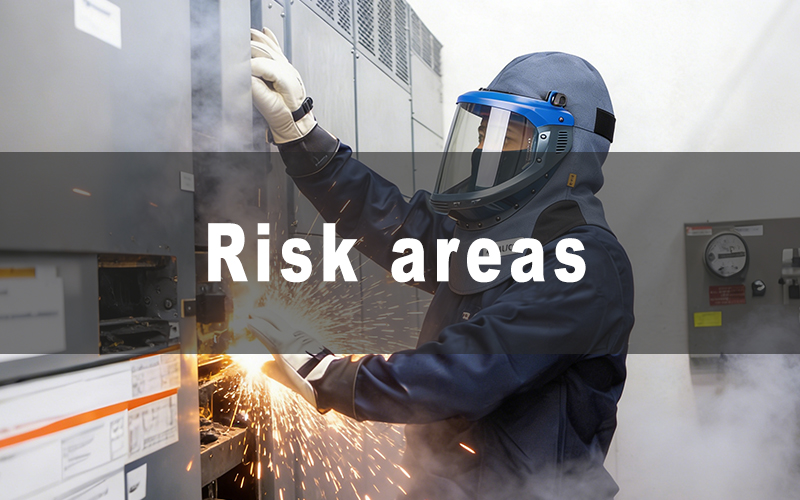
Arc flash hazards are typically associated with intense heat, flames, and explosive energy. While most safety protocols emphasize general body protection, incident analyses repeatedly show that injuries often occur in specific, less-protected areas—not because protection is unavailable, but because these zones are frequently underestimated or improperly covered.
Understanding these overlooked high-risk body areas is essential for improving PPE strategies and reducing injury severity.
Hands are often the closest body part to energized equipment during operation, inspection, or maintenance.
Risk Factors:
Common Oversight:
Workers may prioritize dexterity over protection, opting for non-arc-rated gloves or removing them temporarily for precision tasks.
Implication:
Hand injuries in arc incidents are often severe, involving deep burns due to direct thermal exposure.
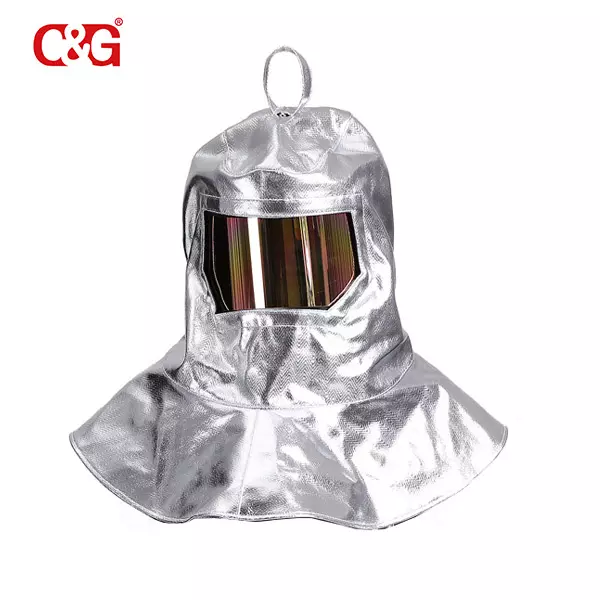
The face and neck are highly sensitive and exposed areas, yet they are not always fully protected.
Risk Factors:
Common Oversight:
Partial PPE usage, such as wearing a helmet without a proper arc-rated visor or neglecting neck coverage.
Implication:
Burns to the face and neck can lead to life-threatening injuries and long-term consequences, even in lower-energy arc events.
Ears are rarely considered in arc flash protection planning, yet they are highly susceptible to injury.
Risk Factors:
Common Oversight:
Lack of arc-rated hoods or balaclavas that provide full ear coverage.
Implication:
Ear burns and internal damage from pressure waves can occur, sometimes without immediate detection.
The interface between sleeves and gloves is one of the most common failure points in PPE systems.
Risk Factors:
Common Oversight:
Failure to ensure continuous coverage when arms are extended or rotated.
Implication:
Even a small exposed area can result in localized but severe burns due to concentrated arc energy.
Depending on working position, the upper legs and groin may be directly exposed to arc energy.
Risk Factors:
Common Oversight:
Assuming torso protection is sufficient while neglecting lower body positioning.
Implication:
These areas can sustain serious burns, particularly when arc energy travels upward from lower-level equipment.
Feet are often closest to the arc origin, especially in switchgear or ground-level equipment operations.
Risk Factors:
Common Oversight:
Relying on standard safety shoes without arc-rated or dielectric properties.
Implication:
Foot injuries can impair mobility and escape response, compounding overall risk during an incident.
What is worn beneath arc-rated clothing can significantly influence injury outcomes.
Risk Factors:
Common Oversight:
Neglecting the importance of flame-resistant undergarments.
Implication:
Melting fabrics can adhere to skin, increasing burn severity even if outer layers perform correctly.
Arc flash protection is only as effective as its weakest point. While primary garments provide essential coverage, injuries often occur in the gaps—both physical and procedural.
A comprehensive protection strategy must go beyond standard compliance and address these overlooked high-risk areas through:
In arc flash incidents, it is rarely the obvious that causes harm—it is the details that are missed. Ensuring that no area is left unprotected is the key to truly effective safety management.
Tags:
Shanghai C&G's personal protective clothing and PPE products are trusted by customers in the world. Our products are exported worldwide, with a strong presence in the United States, China, Japan, Germany, the United Kingdom, India, France, Italy, Brazil, and Canada. In addition, we have a significant customer base in other countries across each continent, including Australia, New Zealand, South Africa, Nigeria, and Egypt in Africa; Argentina, Chile, and Mexico in South America; Russia, South Korea, and Indonesia in Asia; Spain, Poland, and Turkey in Europe; and Saudi Arabia and the United Arab Emirates in the Middle East. Wherever you are in the world, we have the products you need to stay safe and protected. Contact us today to learn more about our products and how we can help you meet your safety needs.











Shanghai C&G is committed to building a leading brand in the safety emergency industry with technological innovation as the core and sustainable development, providing customers with one-stop safety emergency solutions, escorting the safety of customers, and make the world safer!
Building 39, Lane 123, Shenmei Road, Pudong New District, Shanghai, China
inquiry@cgprotection.com
+86-21-38214394


© 2023 Shanghai C&G. All Rights Reserved.