Shanghai, China
+86-17317656853
inquiry@cgprotection.com

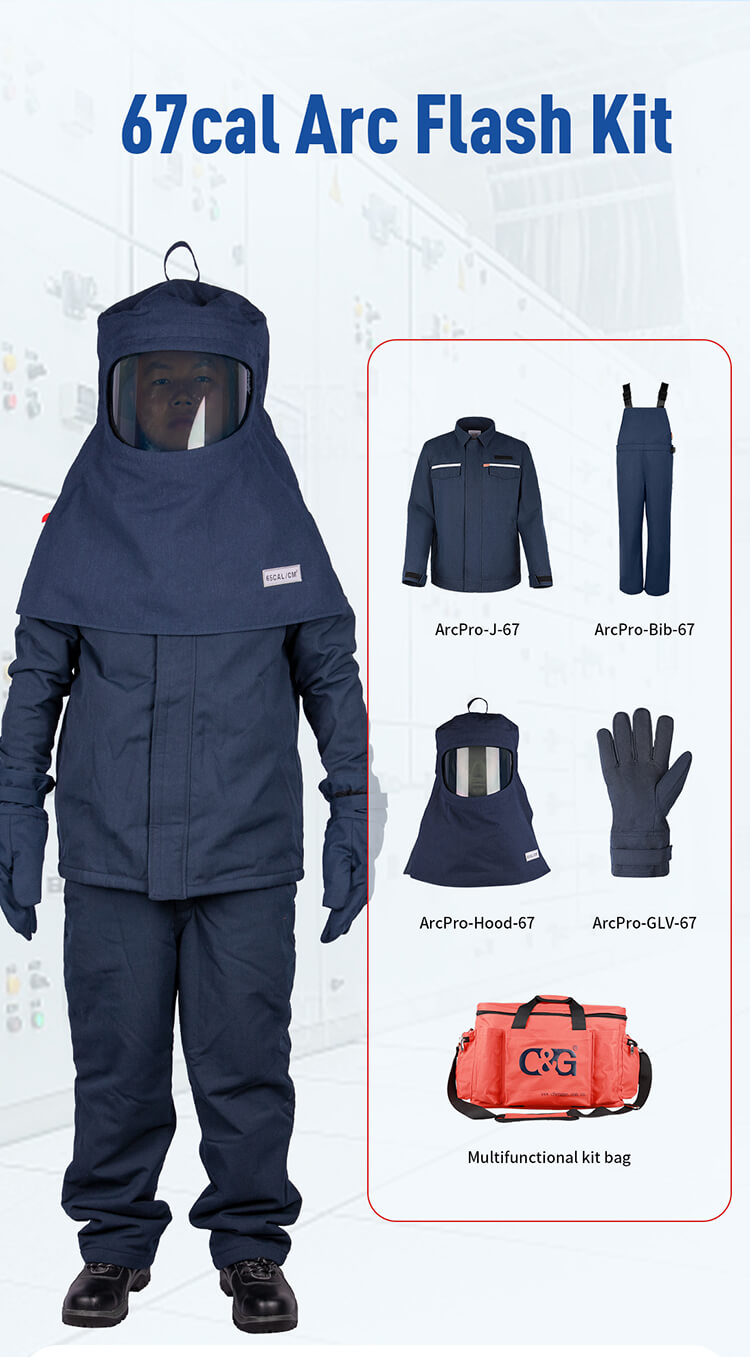
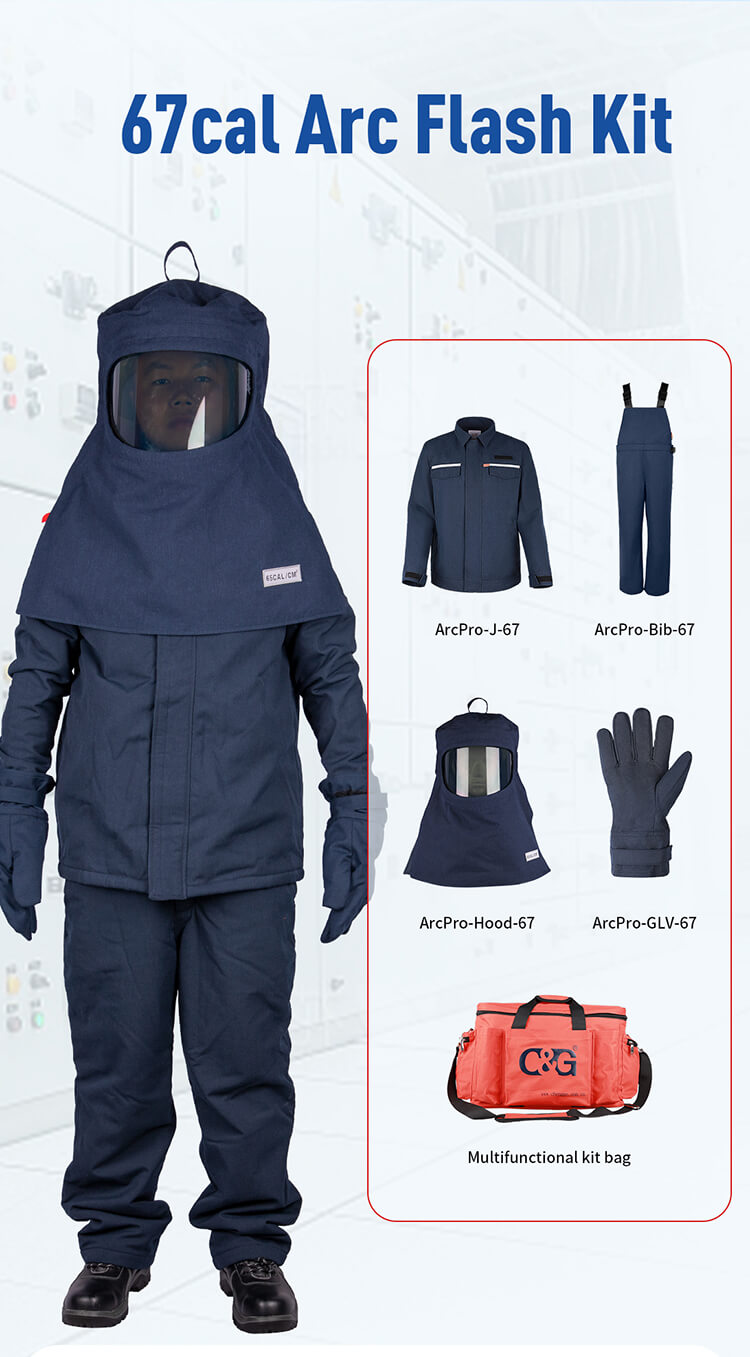
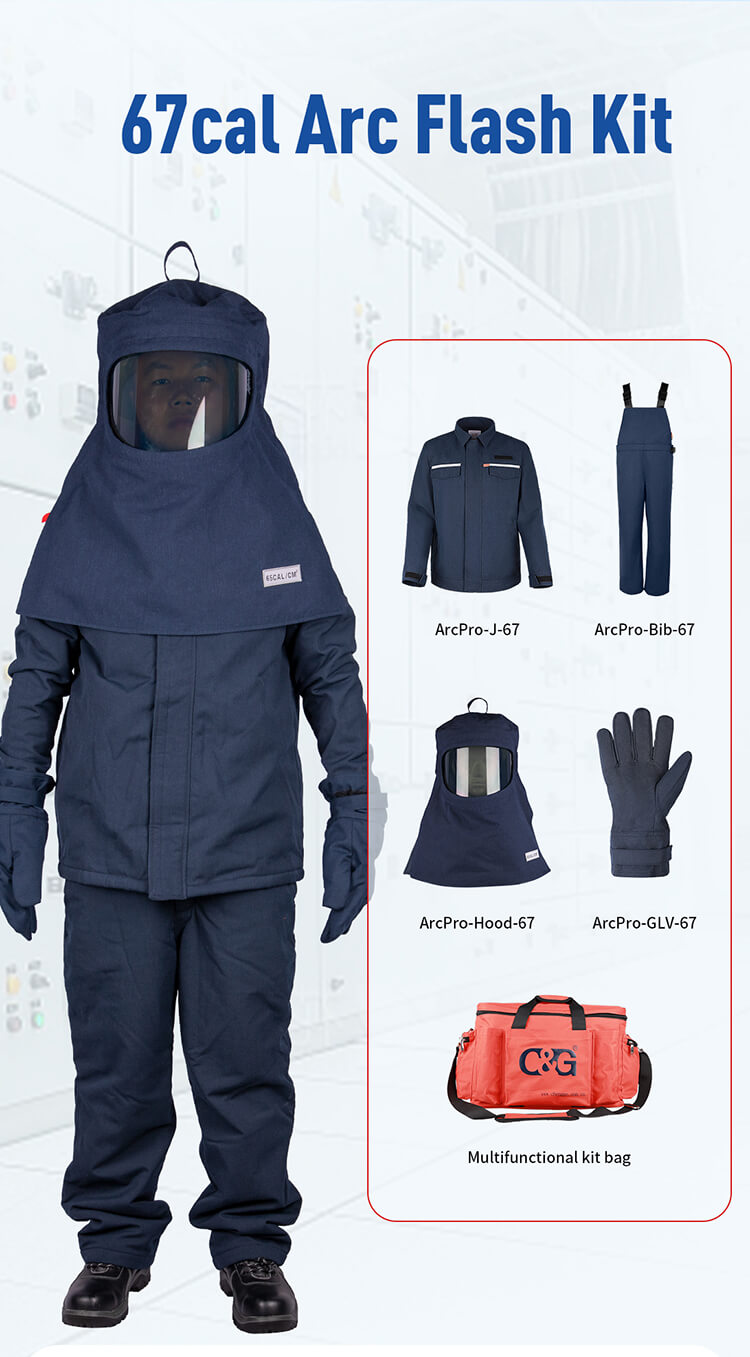
An arc flash kit is not simply a jacket and a pair of trousers sold together. In a real incident the hazard reaches the face, hands, and legs at the same time, and any gap in coverage becomes the weakest point of the whole ensemble. That is why specifying a complete kit — one engineered as a system, rated as a system, and stored as a system — is the most reliable way to protect an electrical worker.
This guide explains what is inside a 67 cal/cm² CAT 4 arc flash suit kit, how the rating is built and verified, and how to decide whether a stock kit or a tailored configuration is the right choice for your task.
Procurement by individual item looks cheaper on paper, but it creates three predictable problems in the field:
Mismatched ratings. A 40 cal jacket worn with a 12 cal trouser set leaves the lower body exposed to the higher incident energy of the task.
Missing interfaces. Hood, balaclava, face shield, glove cuff, and sleeve must overlap correctly. Parts sourced from different suppliers often do not.
No accountability. When the kit is issued, inspected, and stored as one unit with one serial set, it is far easier to prove compliance during an audit.
A kit removes those variables. Every component is cut from the same arc-rated fabric family, tested to the same standard, and sized to layer over the same base clothing.
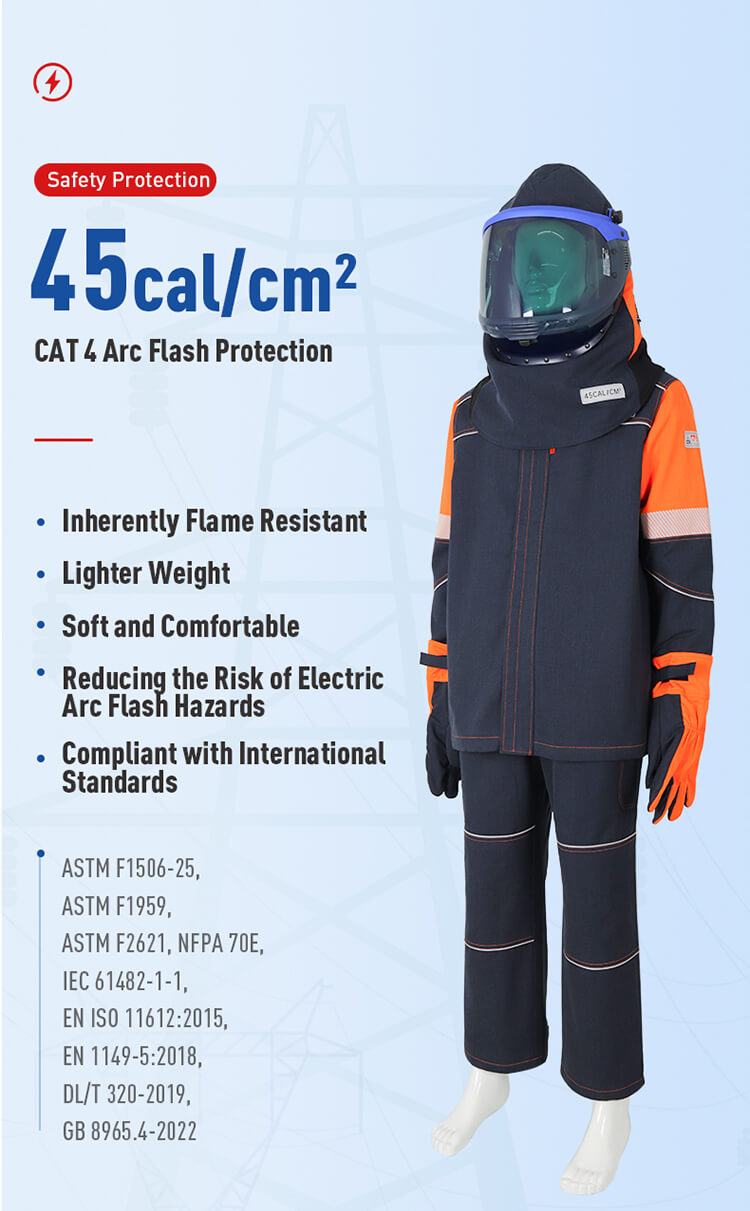
The C&G ArcPro® 67 cal kit is built around five components. Each is available as a spare part, which matters for service life: hoods and gloves usually wear out long before the jacket does.
| Component | Model reference | Function |
|---|---|---|
| Arc-rated jacket | ArcPro-J-67 | Primary torso and arm protection; front closure with storm flap |
| Bib overalls | ArcPro-Bib-67 | Full leg coverage and a continuous barrier at the waist |
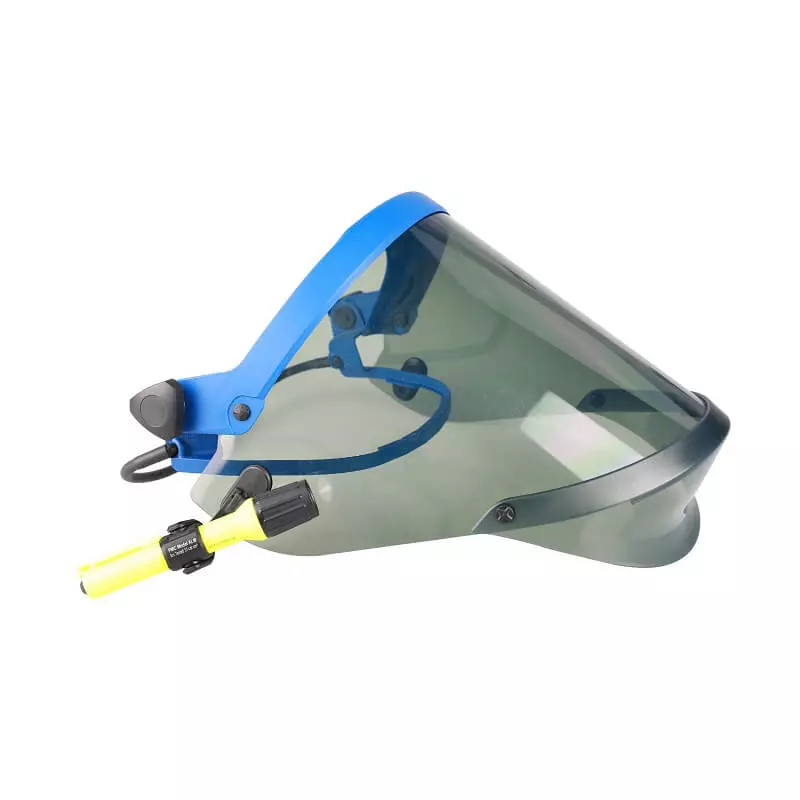
| Hood with face shield | ArcPro-Hood-67 | Head, neck, and face protection; shield rated for arc exposure |
| Arc-rated gloves | ArcPro-GLV-67 | Hand protection with a cuff that overlaps the jacket sleeve |
| Kit bag | Multifunctional carrier | Protects the suit from contamination and abrasion between jobs |
The fabric is ArcPro®, C&G's inherently flame-resistant arc-rated material. Because the flame resistance is a property of the fibre itself rather than a topical treatment, protection does not wash out over the service life of the garment — a point covered in more detail in our article on arc flash suit fabric and durability.
The number on the label is an ATPV — Arc Thermal Performance Value — expressed in cal/cm². It is measured on the fabric system, not guessed from weight or thickness. The 67 cal designation corresponds to an ATPV of 67 cal/cm², tested to ASTM F1959 and assessed against DL/T 320-2019 and GB 8965.4-2022 for the Chinese market.
Two practical points are often misunderstood:
ATPV is not a licence to work at that energy. It is the level at which there is a 50% probability of the onset of a second-degree burn. Selection must follow the calculated incident energy from an arc flash study, with margin, not the highest number available.
The kit is only as strong as its weakest opening. A 67 cal suit worn with a 12 cal balaclava, or with the hood collar left open, does not deliver 67 cal protection to the head and neck.
C&G builds the same architecture across the range, so a site can standardise on one fabric family and one set of interfaces while still matching each task. The table below shows the published ATPV of each series as a starting point for specification.
| Series | Published ATPV | Typical use |
|---|---|---|
| 8 cal | 8 cal/cm² | Low-energy switching and inspection |
| 12 cal | 17.9 cal/cm² | General electrical maintenance, PPE Category 2 work |
| 27 cal | 32 cal/cm² | Panel work, troubleshooting on energised equipment |
| 40 cal | 45 cal/cm² | Heavy industrial maintenance, CE certified through AITEX |
| 55 cal | 55 cal/cm² | High-energy switching and racking |
| 65 / 67 cal | 67 cal/cm² | Maximum-exposure tasks, CAT 4 environments |
Note that the published ATPV is usually above the nominal series name. Always specify using the tested value, and confirm the calculated incident energy at the working distance before choosing a level — the principles are set out in our guide to arc flash suit protection levels.
Injury data consistently shows that hands and face are over-represented in arc flash incidents, yet they are the first items to be downgraded when a worker feels uncomfortable. Three rules keep the kit intact:
Hood shield rating must meet or exceed the suit. The hood shield on the 67 cal kit is matched to the garment; substituting a lower-rated shield silently reduces head protection.
Glove cuffs go outside the sleeve. This sheds molten metal and prevents it from running into the glove.
Leg gaiters or trouser overlays close the boot gap. Arc-rated footwear or dielectric overshoes complete the circuit at the floor.
A 67 cal suit is heavy, and heat stress is a genuine hazard in its own right. C&G cuts the kit with a deliberate loose fit: the trapped air layer improves thermal insulation, and the extra room allows the suit to be worn over flame-resistant base layers without compressing the fabric. Too tight a fit is a safety problem, not a tailoring preference. Our separate arc flash suit sizing guide covers measurement and configuration in detail.
Each series is supported by third-party test reports, and the documentation should travel with the kit:
ASTM F1959 — arc rating of materials
ASTM F2621 — arc rating of finished garments
ASTM F2178 — face and head protection
IEC 61482-1-1 — international arc thermal performance
DL/T 320-2019 and GB 8965.4-2022 — Chinese electric power industry and national requirements
C&G holds ISO 9001, ISO 14001, and ISO 45001 certification, and the group's products carry CE, LA, and CCCF marks where applicable. For buyers who need a defensible paper trail, request the test report for the specific ATPV you are purchasing, not just a generic certificate.
Arc-rated garments fail from contamination and mechanical damage far more often than from loss of flame resistance. Wash at 60 °C with a neutral detergent, avoid chlorine bleach and fabric softener, and never store the suit in a vehicle where it can bake in sunlight. Inspect before every use: look for holes, worn cuffs, damaged closures, and contaminated fabric. A hood with a scratched or delaminated shield should be taken out of service immediately.
Shanghai C&G Safety Equipment Group has been manufacturing protective clothing since 2005, with a research and development centre and an independent laboratory in Shanghai and distribution to more than 110 countries. For arc flash programmes specifically, that means:
One fabric family across the range — 8 to 67 cal, so interfaces always match.
Stock and short lead times on standard sizes and standard colours, with navy and sky blue as the regular options.
Customisation — size, colour, reflective tape, and company identification.
Engineering support — incident energy calculation to IEEE 1584 and NFPA 70E, plus arc flash label production using ETAP.
If you are standardising PPE across several sites, the kit format also simplifies training: one donning sequence, one inspection checklist, one spare-parts list.
CAT 4 is a PPE category in NFPA 70E, not a fabric rating. A 67 cal suit comfortably covers CAT 4 work, but the correct choice is always driven by the calculated incident energy at the task location, not by the category label alone.
Yes. Jackets, bibs, hoods, and gloves are all available separately, which is normally cheaper than replacing a complete kit when only the hood or gloves are worn out.
No. ArcPro® is inherently flame resistant, so the arc rating does not degrade with repeated washing. Mechanical wear and contamination are the real limits on service life.
C&G can calculate incident energy and produce equipment labels, then translate those results into a kit specification per location. Contact our team through the inquiry form to discuss a programme.
Buying an arc flash kit is a decision about interfaces as much as about fabric. A complete 67 cal CAT 4 kit from C&G keeps the jacket, bib, hood, gloves, and carrier in one tested system, so the rating on the label is the rating the worker actually receives. Start from the incident energy, choose the series, confirm the ATPV on the test report, and size for layering — in that order.
Browse the full arc flash clothing range or send us your task list and calculated incident energies for a kit recommendation.
Tags:
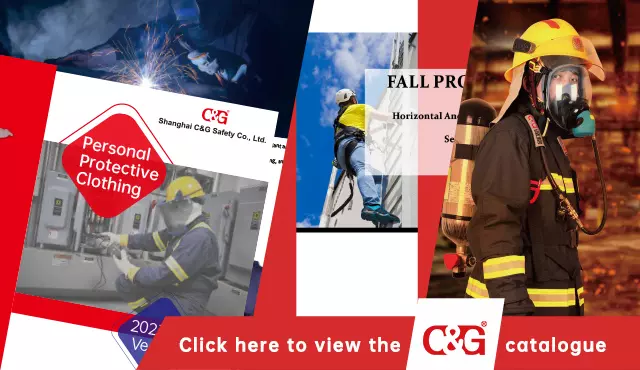
Shanghai C&G's personal protective clothing and PPE products are trusted by customers in the world. Our products are exported worldwide, with a strong presence in the United States, China, Japan, Germany, the United Kingdom, India, France, Italy, Brazil, and Canada. In addition, we have a significant customer base in other countries across each continent, including Australia, New Zealand, South Africa, Nigeria, and Egypt in Africa; Argentina, Chile, and Mexico in South America; Russia, South Korea, and Indonesia in Asia; Spain, Poland, and Turkey in Europe; and Saudi Arabia and the United Arab Emirates in the Middle East. Wherever you are in the world, we have the products you need to stay safe and protected. Contact us today to learn more about our products and how we can help you meet your safety needs.









Shanghai C&G is committed to building a leading brand in the safety emergency industry with technological innovation as the core and sustainable development, providing customers with one-stop safety emergency solutions, escorting the safety of customers, and make the world safer!
Building 39, Lane 123, Shenmei Road, Pudong New District, Shanghai, China
inquiry@cgprotection.com
+86-21-38214394


© 2023 Shanghai C&G. All Rights Reserved.