Shanghai, China
+86-17317656853
inquiry@cgprotection.com

Most arc flash suit failures that reach the investigation stage are not fabric failures. They are fit failures: a sleeve that rides up when the arm is raised, a hood that will not close over a hard hat, a trouser leg that opens a gap at the boot, or a suit so restrictive that the wearer removes the hood between tasks. Sizing an arc flash suit is therefore a technical decision, not a purchasing detail.
This guide sets out how to measure, how much allowance to add for layering, which configuration suits which task, and how to write an order that leaves nothing to interpretation.
Arc-rated garments protect partly through the air layer trapped between the fabric and the skin. C&G cuts the ArcPro® range with a deliberate loose fit for exactly this reason: the trapped air improves thermal insulation, while the extra room lets the suit sit over flame-resistant base layers without compressing the arc-rated fabric.
A garment that is too tight loses both benefits. It also restricts movement, which increases the chance of snagging on live parts and raises heat stress — the second hazard in any high-calorie suit. A garment that is far too large is not a safe default either: excess length drags on the floor, cuffs swallow the hands, and the hood collar stops sealing.
C&G keeps regular sizes of the standard configurations in stock, in navy and sky blue, which keeps lead times short for maintenance and shutdown work. Custom sizing is available for crews that fall outside the regular range or need a non-standard combination, such as a tall bib with a short jacket, or a robe for a specific task.
A practical rule: if more than a small minority of a crew needs alteration, specify custom sizing for the whole group. Mixed sizing within a team leads to suits being swapped between workers, which breaks the link between inspection records and the person wearing the garment.
Measure the person, not an old suit, and measure over the clothing that will actually be worn underneath. Use a flexible tape, keep it level and snug but not tight, and record every value in centimetres.
| Measurement | How to take it |
|---|---|
| Chest | Around the fullest part of the chest, tape level under the arms |
| Waist | At the natural waistline, over the base layer |
| Hip / seat | Around the fullest part of the hips, feet together |
| Inseam | From the crotch seam to the desired trouser hem |
| Outseam / height | Waist to floor at the side, plus overall standing height |
| Sleeve | From the shoulder point to the wrist bone, arm slightly bent |
| Neck | Around the base of the neck, where the hood collar sits |
Add two more entries to the sheet: head circumference for hood sizing, and hand length plus palm circumference for gloves. Both are the components most often ordered by guesswork.
Arc flash suits are outer layers. The measurement you take over a t-shirt is not the measurement you should order for someone wearing a flame-resistant shirt and thermal base layer in winter.
Summer configuration: measure over a single FR base layer. Allow a normal loose fit, not an oversized one.
Winter or high-calorie configuration: measure over the complete layering system, including any insulated mid-layer, and note on the order which layers were worn during measurement.
Consistency: if a site issues the same layering all year, standardise on one measurement convention and put it in the PPE specification so repeat orders match.
The same protection level can be delivered in several shapes. Choose by task duration, access, and how much of the body needs coverage.
| Configuration | Best for | Watch out for |
|---|---|---|
| Jacket + bib overalls | General maintenance, good waist coverage, easy to don | Bib straps must not slip under the jacket collar |
| Jacket + trousers | Faster donning, mixed teams | Waist gap opens when reaching overhead |
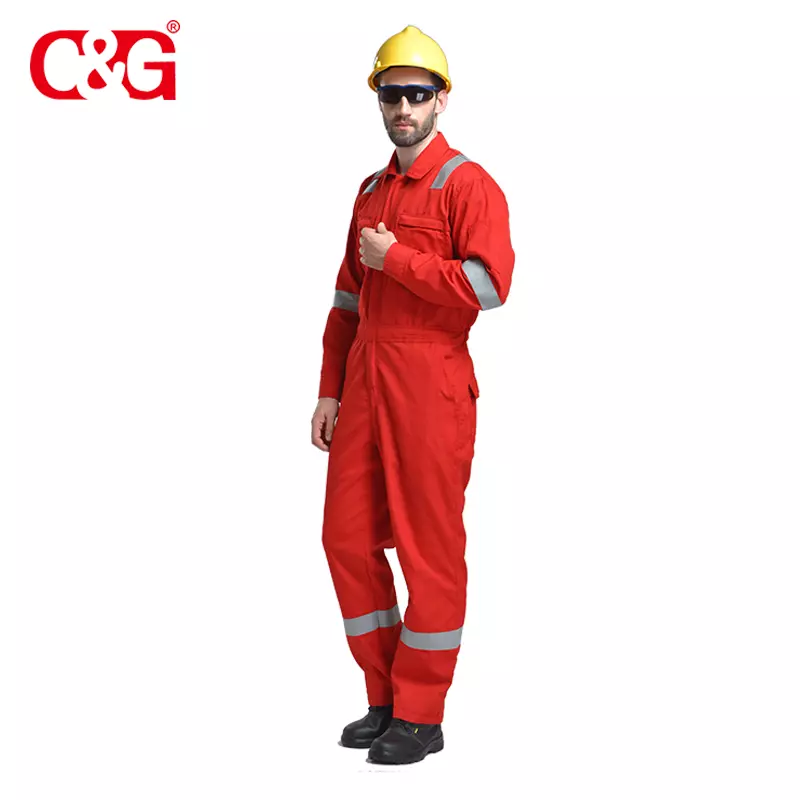
| Coverall | Confined spaces, no waist separation | Less ventilation; sizing is less forgiving |
| Robe / long coat | Switching tasks, quick response, layered over trousers | Leg coverage depends on the trousers underneath |
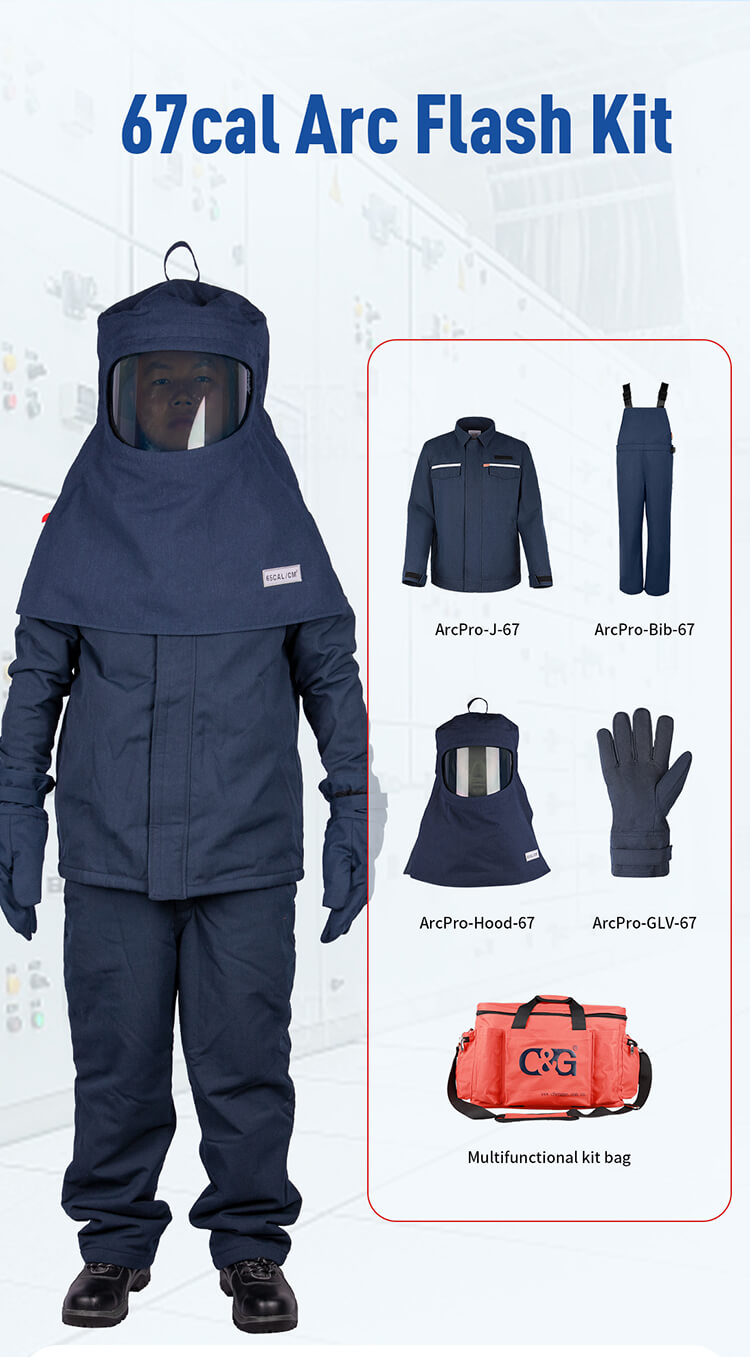
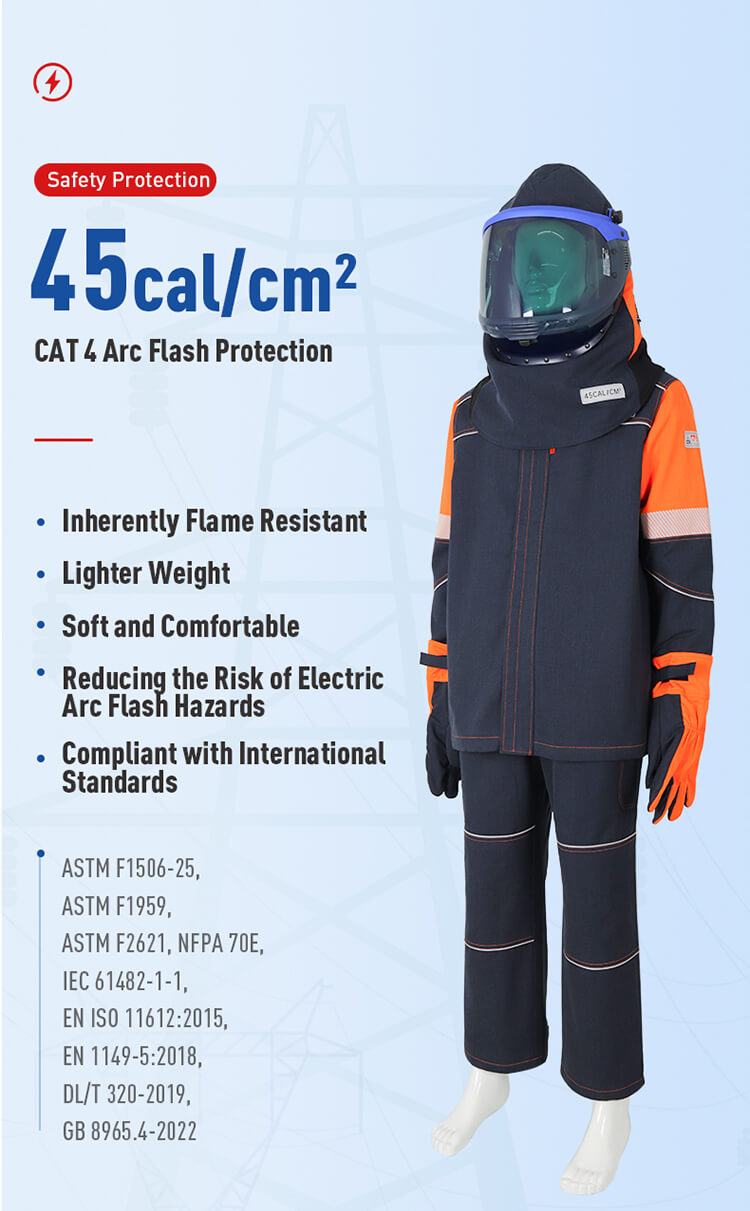
| Full kit with hood and gloves | Maximum exposure, CAT 4 work | Heat stress; plan work-rest cycles |
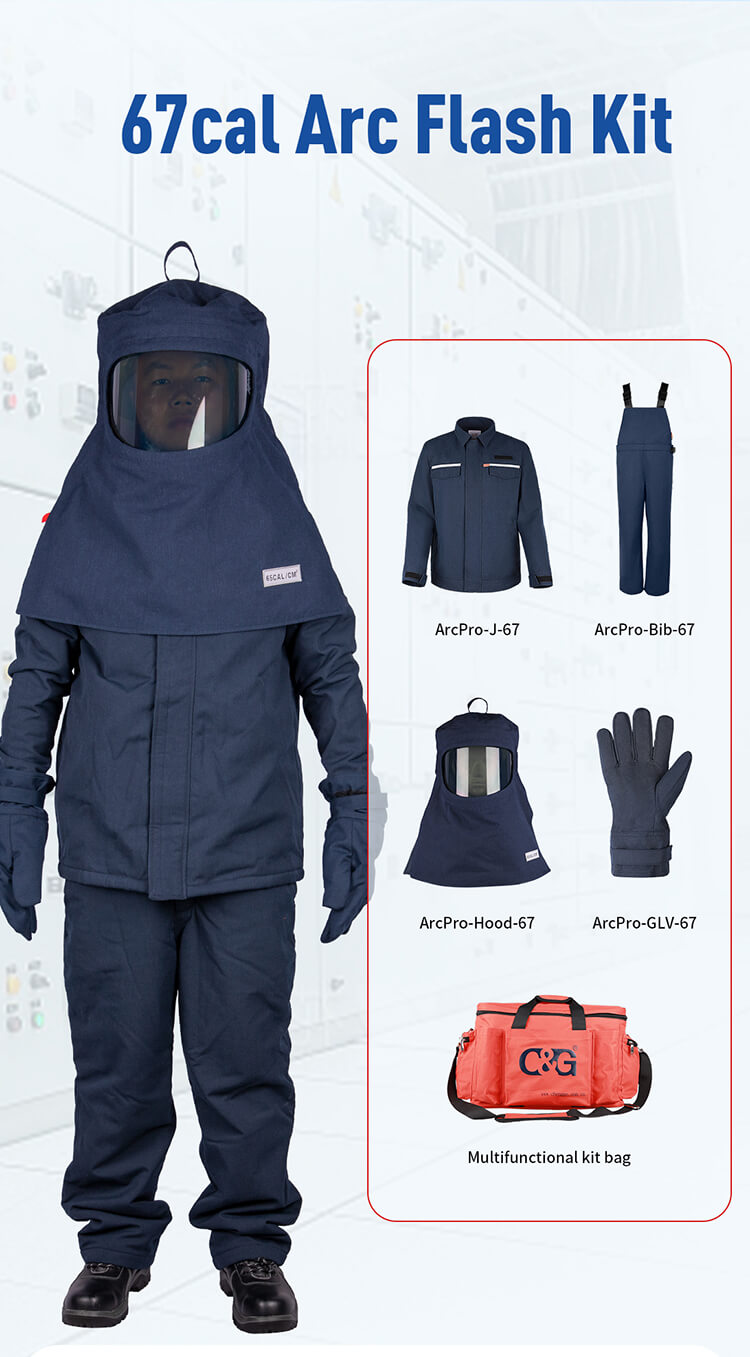
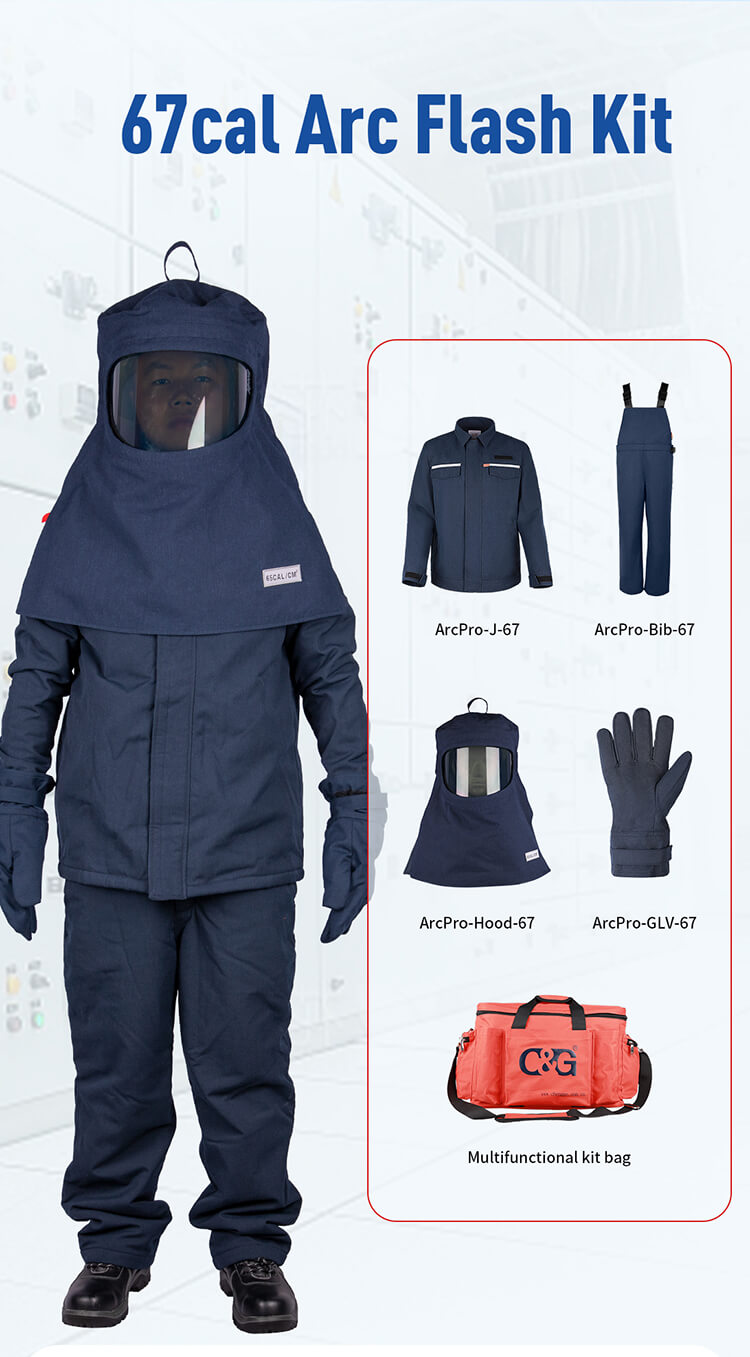
Our guide to what is inside a 67 cal kit shows how the components are matched at the top of the range.
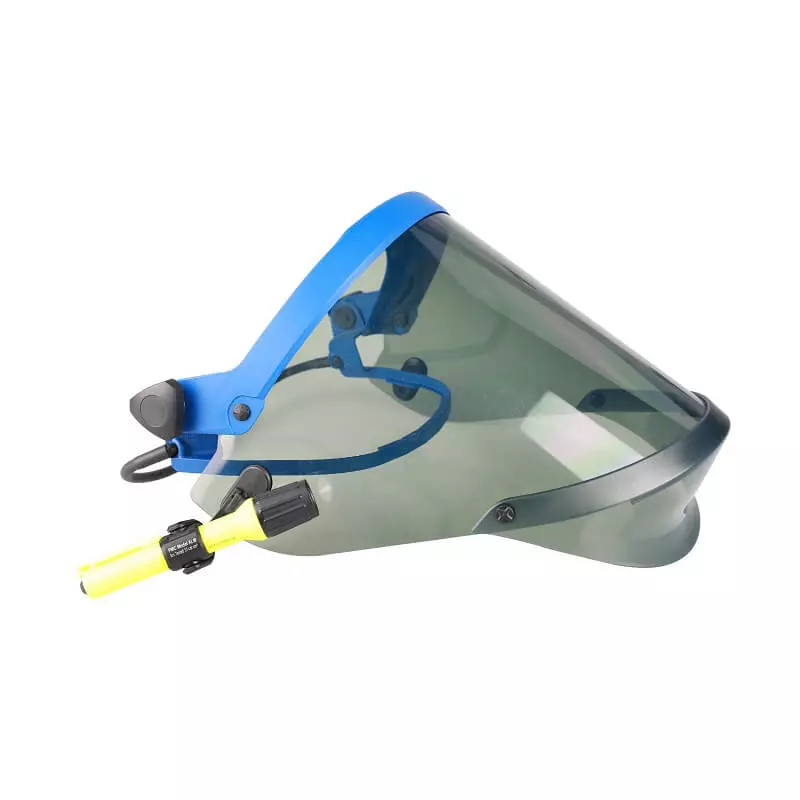
The hood is the hardest item to get right because it has to work with a hard hat, a balaclava, and the wearer's field of view.
Measure head circumference at the widest point, above the ears.
Confirm whether the hood is worn over or instead of a hard hat, and specify that on the order.
Check that the shield sits far enough from the face that safety glasses fit underneath, and that the wearer can look down without the shield touching the chin.
Verify the shield rating matches the suit. A hood shield is a replaceable part — keep spares, because a scratched shield is a rejected hood.
Glove sizing is usually quoted in half sizes based on palm circumference and hand length. Two fit checks matter more than the number:
The cuff must overlap the jacket sleeve on the outside, so molten material cannot run inside.
The fingers must reach the end of the glove without the palm bunching; a bunched palm causes grip fatigue and dropped tools.
At the ankle, confirm that the trouser hem covers the boot top when the wearer kneels and squats. If it does not, add arc-rated gaiters or choose a longer inseam rather than relying on the boot.
Fit and heat stress are linked. A suit that is correctly sized but too warm for the task will be unzipped at the collar within twenty minutes. When specifying high-calorie suits, plan the work in short energised windows, provide cool-down breaks, and consider a lighter series for the non-energised portion of the job. C&G's range spans 8 to 67 cal specifically so that a programme can step down where the study allows.
Incident energy from the arc flash study, per task and per location.
Required ATPV, taken from the test report rather than the series name.
Configuration: jacket and bib, jacket and trousers, coverall, or robe.
Measurement sheet per worker, with layering noted.
Hood type and hard hat compatibility.
Glove sizes, plus a spare pair per crew.
Colour, reflective tape, and company identification if required.
Spare hoods and shields as consumables.
Shanghai C&G Safety Equipment Group has manufactured protective clothing since 2005, with an R&D centre and independent laboratory in Shanghai and customers in more than 110 countries. Standard sizes and standard colours are stocked for short lead times; size, colour, reflective tape, and branding can be customised. The group holds ISO 9001, ISO 14001, and ISO 45001 certification and CE, LA, and CCCF marks where applicable, and can support the specification stage with incident energy calculation to IEEE 1584 and NFPA 70E plus arc flash labelling.
Send a single email with your measurement sheet and calculated incident energies and we will return a sized bill of materials, including spare hoods and gloves.
No. Size to the measured body plus the intended layering. Oversizing creates trip and snag risks and prevents the hood collar from sealing; undersizing compresses the fabric and removes the insulating air gap.
Only if it fits both properly and inspection records follow the garment rather than the person. In practice, individual issue is easier to audit.
At each reorder and after any significant change in body size or in the layering system. A winter order should never be based on summer measurements.
Yes — request the ArcPro® size chart together with the test reports for the series you are considering, or contact the team with your measurements.
Correct sizing preserves the three things an arc flash suit is supposed to deliver: coverage, an insulating air gap, and enough mobility that the wearer keeps the suit on. Measure over the real layering, choose the configuration by task, confirm hood and glove compatibility, and put the numbers on the order. The rest is straightforward.
Explore the full ArcPro® arc flash clothing range, or read our complete guide to arc flash suits before you specify.
Tags:
Shanghai C&G's personal protective clothing and PPE products are trusted by customers in the world. Our products are exported worldwide, with a strong presence in the United States, China, Japan, Germany, the United Kingdom, India, France, Italy, Brazil, and Canada. In addition, we have a significant customer base in other countries across each continent, including Australia, New Zealand, South Africa, Nigeria, and Egypt in Africa; Argentina, Chile, and Mexico in South America; Russia, South Korea, and Indonesia in Asia; Spain, Poland, and Turkey in Europe; and Saudi Arabia and the United Arab Emirates in the Middle East. Wherever you are in the world, we have the products you need to stay safe and protected. Contact us today to learn more about our products and how we can help you meet your safety needs.











Shanghai C&G is committed to building a leading brand in the safety emergency industry with technological innovation as the core and sustainable development, providing customers with one-stop safety emergency solutions, escorting the safety of customers, and make the world safer!
Building 39, Lane 123, Shenmei Road, Pudong New District, Shanghai, China
inquiry@cgprotection.com
+86-21-38214394


© 2023 Shanghai C&G. All Rights Reserved.