Shanghai, China
+86-17317656853
inquiry@cgprotection.com

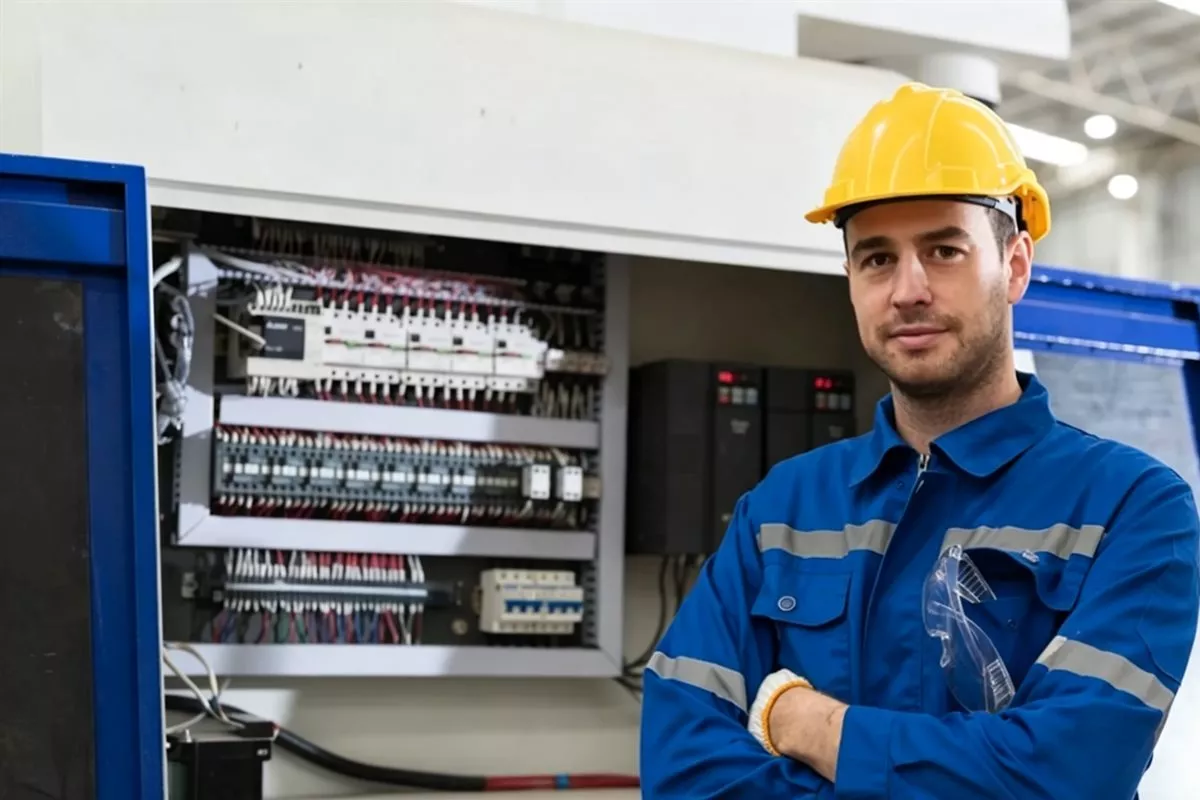
An insulating mat on the floor in front of a switchboard is the cheapest piece of electrical protection on site and the one most often taken for granted. It gets walked on, dragged, stored in a hot store room and pressed into service for years without anyone asking whether it still insulates. That is a problem, because a mat that has hardened, cracked or absorbed oil is no longer a dielectric barrier — it is a reminder that one used to be there.
Insulating mats and blankets are secondary protection: they reduce the chance of a person becoming part of a fault path through the floor or through contact with earthed metal, and they provide a clean insulating surface to stand on during switching and testing. They do not replace isolation, gloves or arc-rated clothing, and they do not carry an arc rating. What they do carry is a voltage class, a test history and a defined service life — and a workable inspection programme is what keeps all three honest.
Two standards dominate procurement worldwide, and they are not interchangeable in test method even where the classes look similar:
ASTM D178 covers rubber insulating mats and blankets in the United States, with Type I (non-oil-resistant) and Type II (oil-resistant) compounds and classes defined by maximum use voltage.
IEC 61111 covers insulating mats for electrical purposes in most other markets, with classes 0 to 4 and a proof-test regime tied to the class.
A mat ordered to one standard should be tested and replaced to the same standard. Mixing a class 2 mat from one supplier with a class 2 blanket from another and assuming identical performance is an assumption, not a specification.
Class sets the ceiling on working voltage; thickness is a consequence of the class and of the compound, not a quality indicator on its own. A thicker mat is not automatically a higher class, and a higher class is not automatically the right choice for a low-voltage switch room — stiffness and trip risk matter at floor level.
| Class | Maximum use voltage (AC) | Typical application |
|---|---|---|
| Class 0 | 1,000 V | LV distribution boards, control panels, battery rooms |
| Class 1 | 7,500 V | MV switchgear fronts, transformer secondary work |
| Class 2 | 17,000 V | MV switching, outdoor cubicles, substation floors |
| Class 3 | 26,500 V | Higher-voltage switching positions |
| Class 4 | 36,000 V | Transmission-level switching platforms |
Two rules keep the table useful. First, the class must be at or above the highest voltage that can appear at the location, not the nominal system voltage. Second, the mat protects the person standing on it — it does not protect the hands, the face or the torso, and it does not extend the working distance.
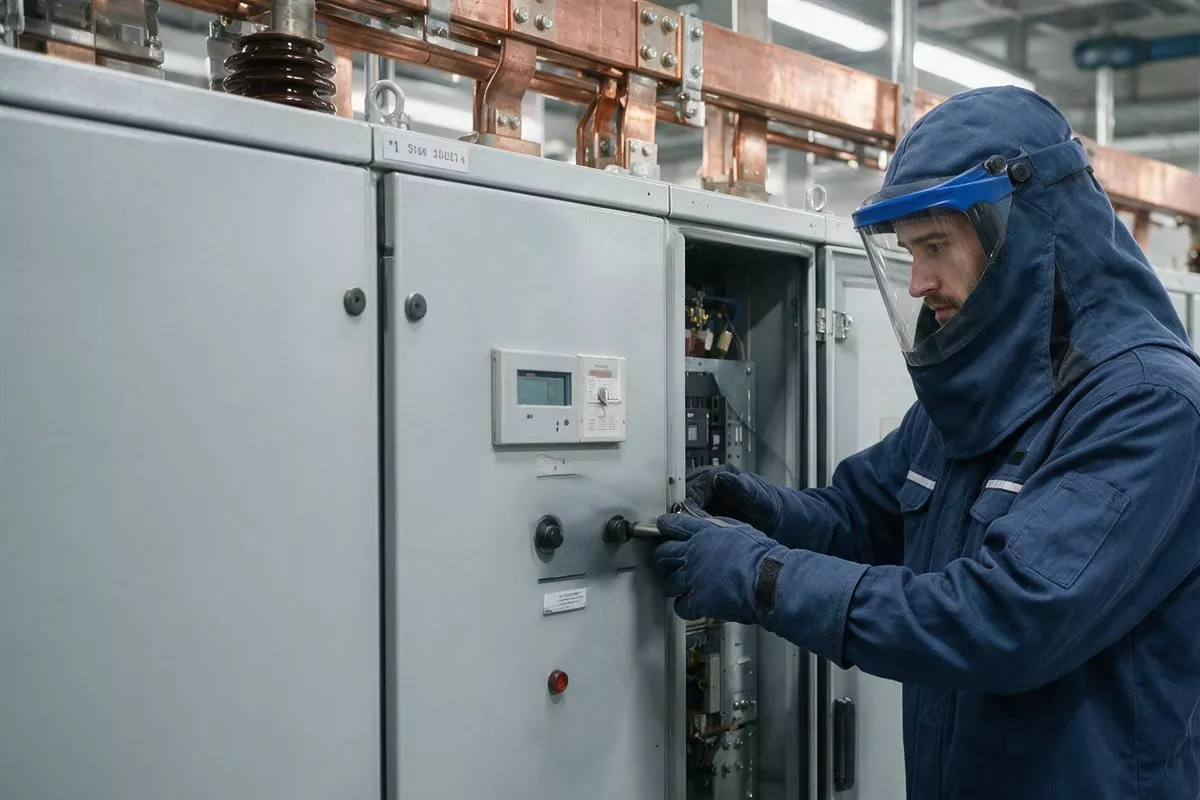
In front of switchboards and motor control centres, covering the full working width and deep enough that a person can stand and step back without leaving the mat.
Battery rooms and DC plant, where the floor may be conductive through spilled electrolyte and where the touch voltage risk is continuous.
Temporary barriers and covers during maintenance, using blankets rather than mats where the surface is vertical or irregular.
Test positions, where instruments are connected to live circuits and the technician needs a defined insulating standing area.
Blankets are the flexible counterpart: they drape over busbars, wrap cable terminations during work nearby, and shield adjacent live parts. A blanket used as a floor mat, or a mat folded over a bushbar, is a product being used outside its design — the compound is the same family, the mechanical duty is not.
Most mat failures in service are installation failures, not manufacturing failures:
Clean, dry, flat floor. Grit under a mat becomes a puncture point under a boot; water under a mat becomes a tracking path at the edge.
No sharp edges or fixings. Grating, floor plates and cable covers cut rubber from below.
Butt joints overlapped, not gapped. Where two mats meet, overlap them and tape the joint so a boot cannot catch the edge. Gaps are where people stand on the floor and think they are on the mat.
Secured against movement. Bevel-edged mats and edge strips stop the curl that turns a mat into a trip hazard.
Marked at the boundary. A painted line or a labelled edge tells the next person where protection ends.
Rubber insulation degrades from the surface inward, and the enemies are ordinary:
Ozone and UV — sunlight and around older switchgear with corona activity. Store rolled, not folded, away from windows.
Oil and solvents — a Type I mat in an oil-rich environment swells and softens. Use Type II compound where oil is present, and clean with mild soap and water, never solvent.
Heat — store rooms next to boiler plant or in summer containers harden the compound and start surface cracks.
Folding and creasing — blankets stored folded develop creases that become cracks. Roll them around a core.
Embedded metal — staples, wire offcuts and swarf pressed into the surface are an immediate withdrawal criterion, not something to pick out and ignore.
The programme that survives contact with a busy site has three tiers:
Before each use (seconds). Look for cuts, cracks, embedded metal, oil contamination, delamination and a clean, dry surface. If it fails the look, it leaves service.
Periodic field inspection (monthly). A named person walks the switch rooms, checks that mats are in place, flat, correctly positioned and legible at the class marking, and records the date. Missing mats get replaced; that record is what proves the programme exists.
Dielectric retest (annual, or per local rule). Proof testing to the governing standard — commonly every twelve months in service for mats and blankets, with the interval shortened where the environment is aggressive. The test result is attached to the item, not to the purchase order.
The single most effective control is the date marking: every mat and blanket carries a unique number and its last test date, visible without unrolling it. Whether you use a stencil, a tag or a colour code matters less than the fact that anyone can tell in five seconds whether the mat they are about to stand on is in test.
Take a mat or blanket out of service, permanently, when any of the following is found:
Cuts, punctures or tears that reach the inner layer, or any damage through the full thickness.
Surface cracks that catch a fingernail, or a hardened, glossy or sticky surface.
Swelling, blistering or delamination after oil or chemical contact.
Embedded metal or grit that cannot be removed without damaging the surface.
A failed dielectric test, or a test date older than the programme allows.
A withdrawn mat should be destroyed or clearly marked and removed from site. Mats that drift back into service from a "maybe" pile are how programmes fail quietly.
Three questions to a supplier cut through most of the marketing: which standard and class is the product tested to, what is the compound type and oil resistance, and what is the retest interval and marking method the manufacturer recommends? If the answer to the first is vague, the product is not for switch rooms.
For the wider picture of how insulating PPE fits together on a live-work task, our guides to insulating rubber gloves and their classes and to metering work at service entrances cover the hand and body layers that go with a floor mat. If you are specifying mats for a new switch room, the material selection guide for insulating pads sets out the compound choices behind the class table above.
No. Mats and blankets are dielectric barriers against step and touch voltage; they carry a voltage class, not a cal/cm² rating. Arc-rated clothing, face protection and gloves are chosen separately from the incident energy study.
Common practice is a dielectric retest every twelve months in service, following ASTM D178 or IEC 61111 as applicable, with a shorter interval in aggressive environments. The date must be recorded on the item and in the register.
Only if its class is at or above the highest voltage present. A class 0 mat in front of MV gear is a false sense of protection; the class marking must match the location, and the location list should say so.
Both are insulating rubber, but mats are made for standing surfaces and blankets for draping over or wrapping equipment. The mechanical duties differ, so using a blanket as a floor mat shortens its life and may void its test status.
Rolled, not folded, in a dry, dark, temperature-controlled store away from oil, solvents, ozone sources and direct sunlight. Blankets should be rolled around a core rather than creased.
If you are building or auditing an insulating mat programme, send the switch room list and system voltages to the C&G team. We can match class, compound and size to each location and supply the marking and documentation your register needs. The full arc flash and insulating PPE range covers mats, blankets, gloves and arc-rated clothing for the same working positions.
Tags: insulating mats, insulating blankets, electrical safety

Shanghai C&G's personal protective clothing and PPE products are trusted by customers in the world. Our products are exported worldwide, with a strong presence in the United States, China, Japan, Germany, the United Kingdom, India, France, Italy, Brazil, and Canada. In addition, we have a significant customer base in other countries across each continent, including Australia, New Zealand, South Africa, Nigeria, and Egypt in Africa; Argentina, Chile, and Mexico in South America; Russia, South Korea, and Indonesia in Asia; Spain, Poland, and Turkey in Europe; and Saudi Arabia and the United Arab Emirates in the Middle East. Wherever you are in the world, we have the products you need to stay safe and protected. Contact us today to learn more about our products and how we can help you meet your safety needs.











Shanghai C&G is committed to building a leading brand in the safety emergency industry with technological innovation as the core and sustainable development, providing customers with one-stop safety emergency solutions, escorting the safety of customers, and make the world safer!
Building 39, Lane 123, Shenmei Road, Pudong New District, Shanghai, China
inquiry@cgprotection.com
+86-21-38214394


© 2023 Shanghai C&G. All Rights Reserved.