Shanghai, China
+86-17317656853
inquiry@cgprotection.com


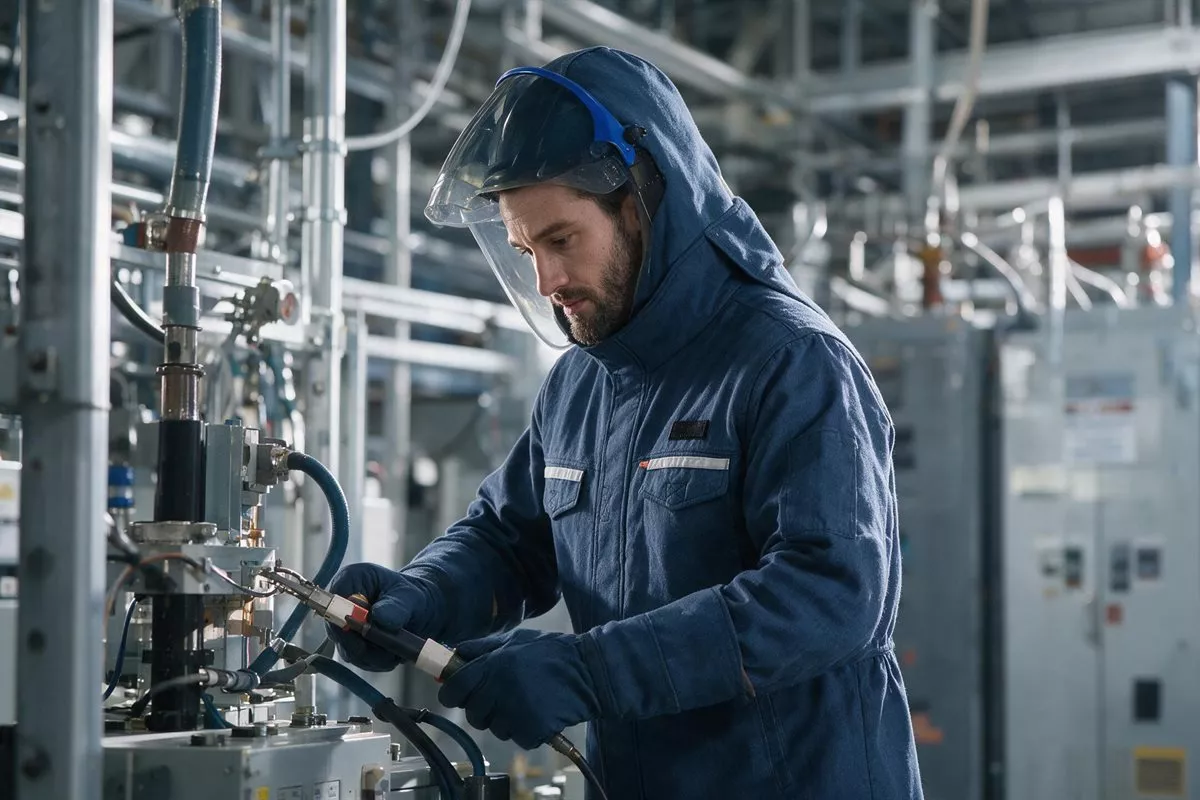
Rain is the most ordinary hazard an arc-rated clothing programme has to survive. A crew working a switchyard in November, a solar farm in the monsoon, or an offshore turbine in sea spray cannot stop for weather — and the rain shell that keeps them dry is frequently the one garment in the system that was never specified at all.
Ordinary rainwear is a problem in two directions. It melts. Polyester, nylon and PVC shells soften and drip at temperatures far below an arc, and a melted shell against an arc-rated suit is a second hazard rather than a second layer. It also traps the protection: a non-breathable shell over a 40 cal suit drives heat stress up until the wearer opens the jacket, which defeats the suit entirely.
This guide covers arc-rated rainwear: what it has to do that ordinary rainwear does not, how the standards fit together, how to size and layer it over a suit, and how to inspect and launder it so that the waterproofing and the arc rating both survive the season.
Two mechanisms make rain a protection issue rather than a comfort issue.
Wet insulation loses performance. Water in the fabric conducts heat far better than the trapped air the arc rating depends on. A soaked suit is less protective than a dry one, regardless of what the label says.
The wrong shell adds fuel. A PVC or PU-coated nylon jacket worn over an arc-rated suit introduces a meltable layer exactly where the arc is closest, and it does so at the outer surface, where the heat flux arrives first.
The conclusion is not that crews should work wet. It is that the rain shell must be arc rated, breathable enough to be worn, and specified at the same time as the suit.
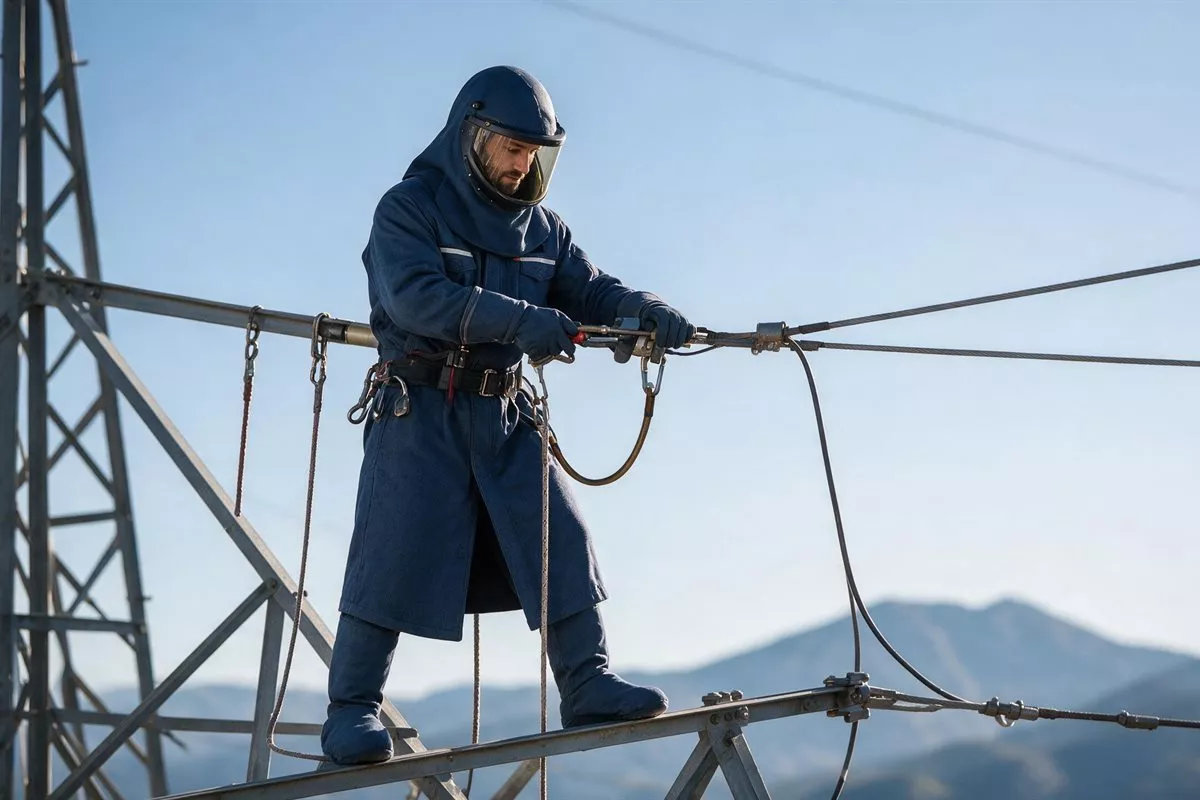
Arc-rated rainwear combines an inherently flame-resistant shell with a waterproof coating and sealed seams. The C&G range follows that construction: a two-layer reflective rain suit with a breathable mesh lining, using a 300D oxford fabric with a PU waterproof coating and 5 cm silver reflective tape for high visibility in low light and at night.
Each element earns its place:
| Element | Why it matters |
|---|---|
| Inherent FR shell | The flame resistance is in the fibre, so it does not wash out or wear off with the coating. |
| PU waterproof coating | Keeps water out without introducing a meltable film against the suit. Coating integrity, not fabric weight, decides whether it stays waterproof. |
| Taped or sealed seams | Seams are where water enters. Stitched-only seams leak within a season. |
| Breathable mesh lining | Lifts the shell off the suit, allows some vapour movement and reduces the condensation that soaks the wearer from the inside. |
| Reflective tape | 5 cm silver tape for visibility during night switching and in vehicle traffic areas. It must be FR-rated tape, not a decorative trim. |
| Antistatic option | Where the site handles flammable atmospheres, the shell can be specified with a static-dissipative construction to EN 1149-5. |
Rainwear is one of the few garments in an arc programme that answers to three separate standards at once, and a supplier who quotes only one of them is answering only part of the question.
Arc and flame: ASTM F1891 for arc- and flame-resistant rainwear, and IEC 61482-2 or EN 61482-2 for garment construction where the shell is part of an arc-rated system.
Water penetration: EN 343, which grades both waterproofness and breathability. A shell rated for water penetration but not breathability will keep rain out and heat in.
Visibility: EN ISO 20471 where the site requires high visibility, which sets minimum areas of fluorescent material and retroreflective tape rather than a general instruction to "be visible".
Add EN 1149-5 for antistatic performance and EN ISO 11612 for heat and flame where the shell is expected to perform beyond rain protection. The arc flash rainwear range lists the standards per style, which is the level of detail a safety file needs.
There is no single rain shell that suits a switchyard, a solar farm and a nacelle. The three configurations below cover most of the demand.
| Configuration | Best for | Watch out for |
|---|---|---|
| Jacket and trousers set | General outdoor work, vehicle and plant areas, long shifts in rain | Waist gap when the jacket rides up; check the overlap over the suit |
| Long coat / robe style | Switching and inspection where the wearer is standing and moving between cubicles | Length must not trip or snag; leg protection still required |
| Winter raincoat with liner | Cold and wet conditions where the suit alone is not warm enough | Liner must be FR; total bulk must not compress the suit |
C&G supplies the spring/autumn 8 cal FR anti-static raincoat and a matching winter version with a liner, both intended to be worn over the arc-rated suit rather than instead of it. That distinction matters: 8 cal rainwear does not turn a 40 cal task into an 8 cal task, and it is not a substitute for the suit.
The order of layers is not negotiable. Base layer, arc-rated suit, then rain shell. Putting a rain shell underneath the suit traps moisture against the body, removes the air gap the suit relies on, and puts a meltable film in the worst possible position.
Sizing has to account for the full stack. A rain jacket bought to the same size as the suit will compress the shoulders and shorten the sleeve, which is how a cuff gap appears when the arm is raised. Measure over the suit and the mid layer, and expect to go up at least one size. Our guide to what to wear under an arc flash suit covers the layers below the suit; the rain shell is the layer above it.
A waterproof shell is, by definition, a barrier to vapour. Worn over a 25 or 40 cal suit in warm rain, it produces exactly the conditions that make a wearer unzip the suit at the wrong moment.
Buy breathability, not only waterproofing. Check the EN 343 breathability class, not just the waterproof rating.
Ventilate the shell, not the suit. Pit zips and back vents in the rain shell allow vapour out without opening the arc-rated layer.
Shorten the exposure. Plan switching and inspection tasks in blocks, with a dry shelter and a change of base layer available.
Use the winter version only when it is cold. A lined raincoat in a mild climate is a heat trap with a reflective stripe.
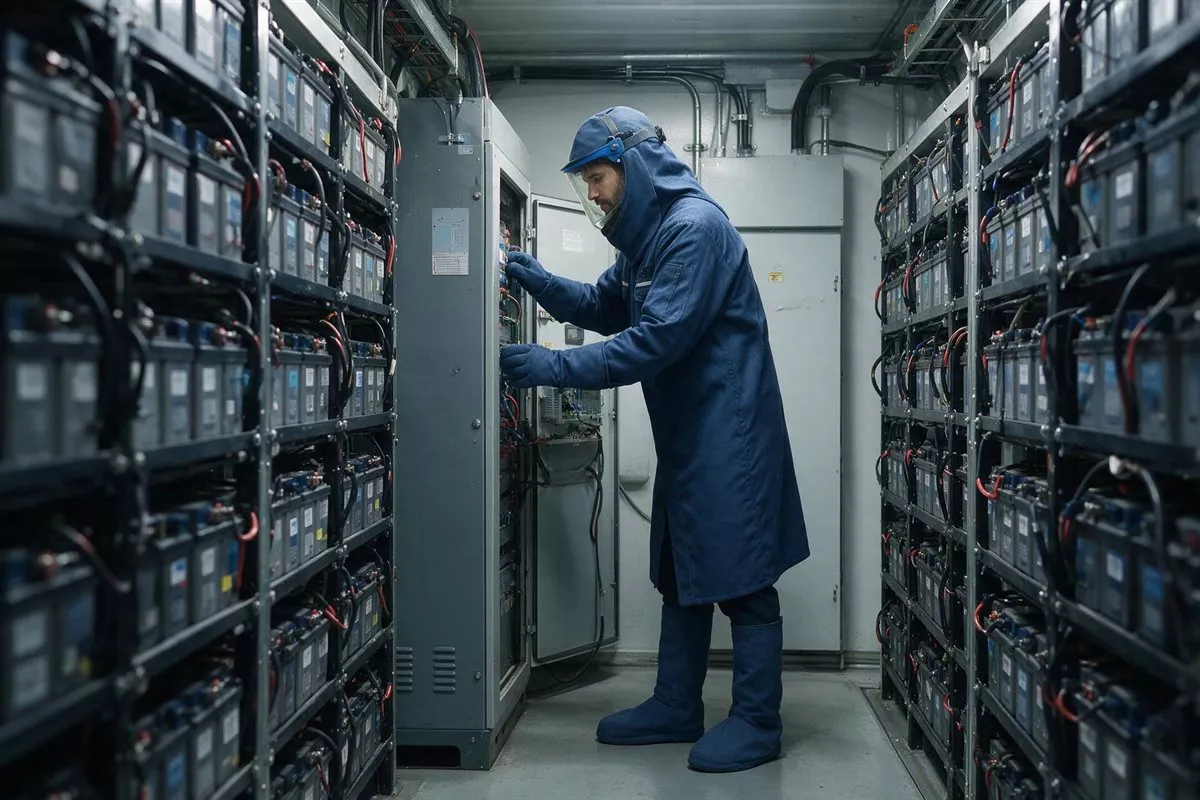
Where the task combines high incident energy with high humidity — battery containers and turbine nacelles in wet weather, for example — the practical answer is a lower-rated suit matched to the task plus a breather shell, not a higher-rated suit that nobody can tolerate. Our article on arc flash protection for solar, battery storage and wind sites works through that trade-off.
Rainwear fails differently from a suit. The fabric usually outlives the waterproofing.
Seams and tape. Lifted seam tape, stitching without a seal, tape peeling at the shoulder or hood.
Coating. Cracking, flaking or a stiff, papery feel where the PU has aged. A shell that has lost its coating still looks intact and is no longer waterproof.
Reflective tape. Cracking, silvering loss, edges lifting. Retroreflection degrades with washing and abrasion long before the tape falls off.
Hardware. Zips that no longer seal, storm flaps that no longer lie flat, missing press studs.
Contamination. Oil, hydraulic fluid and fuel do not wash out of a PU coating and are a fuel load on an arc-rated garment.
The five-minute field test is simple: hold the shell under a running tap at the shoulder and at a seam for a minute and look for water on the inside. A shell that fails is retired from electrical work, whatever its label says.
Arc-rated rainwear is washed far less often than a suit, and each wash costs some coating life, so wash on soiling rather than on a calendar.
Mild detergent, no bleach, no fabric softener, no solvent. Softener destroys both the wicking of the lining and the water repellency of the shell.
Close zips and flaps, wash at the temperature on the care label, and avoid a spin cycle that creases the coating.
Line dry in shade. A hot tumble dryer or a radiator will craze the PU.
Re-proof only with a product approved by the garment manufacturer, and only after the shell has been cleaned. A non-approved spray can add a flammable film.
The general laundry rules for arc-rated garments — detergent chemistry, temperature limits, what never to mix in the machine — are set out in our arc flash suit care and inspection guide and apply here unchanged.
Rainwear is the garment most likely to be stored wet, and wet storage is what turns a waterproof shell into a source of contamination. Hang it to dry before it goes back in the vehicle, and hang it rather than folding it, because a crease held for a week becomes a crack in the coating. Keep it away from fuel cans, hydraulic oil and battery acid, and never store it in the same bag as the suit if either is damp.
For crews working from a vehicle, a separate breathable garment bag per person is a small cost that prevents the most common failure: a shell that smells of diesel and no longer beads water.
Arc rating and standard stated for the shell itself (ASTM F1891, IEC 61482-2), not inferred from the suit.
EN 343 waterproof and breathability class quoted separately.
EN ISO 20471 class stated if high visibility is required, with tape area and placement confirmed.
Seam construction: taped or welded, and stated in writing.
Sizing measured over the suit, with the winter liner included.
Antistatic option (EN 1149-5) where the site handles flammable gas or dust.
Care label and re-proofing instructions supplied with the delivery.
No. Ordinary PVC, PU or nylon shells melt and can add fuel at the outer surface, and they trap heat until the suit is opened. The rain shell has to be arc rated and worn as the outermost layer.
The suit keeps its own rating; the rain shell does not lower it. But the shell's 8 cal rating is not a system rating, so the assembly should be assessed as a system if the task is high energy, and the shell should never be worn instead of the suit.
Usually until the coating or the seam tape fails, which is sooner than the fabric wears out. Inspect the seams and the inside surface each season, and retire the shell when the tap test shows water penetration.
Only with a product approved by the manufacturer, applied to a clean garment and dried away from direct heat. Non-approved sprays and washes can leave a flammable residue on an arc-rated shell.
Only if it is specified as such. High visibility and arc rating are separate certifications, and a fluorescent jacket with reflective tape is not arc rated unless its label says so.
If you are equipping a crew for wet-weather electrical work, send the site conditions and task list to the C&G team. We can match rainwear to your suit ratings, confirm the visibility class your site needs, and supply the test documentation for each style. The arc flash protective clothing range covers suits from 7.5 to 67 cal/cm², with rainwear, hoods, gloves and leggings specified as part of the same system.
Tags: arc rated rainwear, arc flash suit, high visibility clothing

Shanghai C&G's personal protective clothing and PPE products are trusted by customers in the world. Our products are exported worldwide, with a strong presence in the United States, China, Japan, Germany, the United Kingdom, India, France, Italy, Brazil, and Canada. In addition, we have a significant customer base in other countries across each continent, including Australia, New Zealand, South Africa, Nigeria, and Egypt in Africa; Argentina, Chile, and Mexico in South America; Russia, South Korea, and Indonesia in Asia; Spain, Poland, and Turkey in Europe; and Saudi Arabia and the United Arab Emirates in the Middle East. Wherever you are in the world, we have the products you need to stay safe and protected. Contact us today to learn more about our products and how we can help you meet your safety needs.










Shanghai C&G is committed to building a leading brand in the safety emergency industry with technological innovation as the core and sustainable development, providing customers with one-stop safety emergency solutions, escorting the safety of customers, and make the world safer!
Building 39, Lane 123, Shenmei Road, Pudong New District, Shanghai, China
inquiry@cgprotection.com
+86-21-38214394


© 2023 Shanghai C&G. All Rights Reserved.